

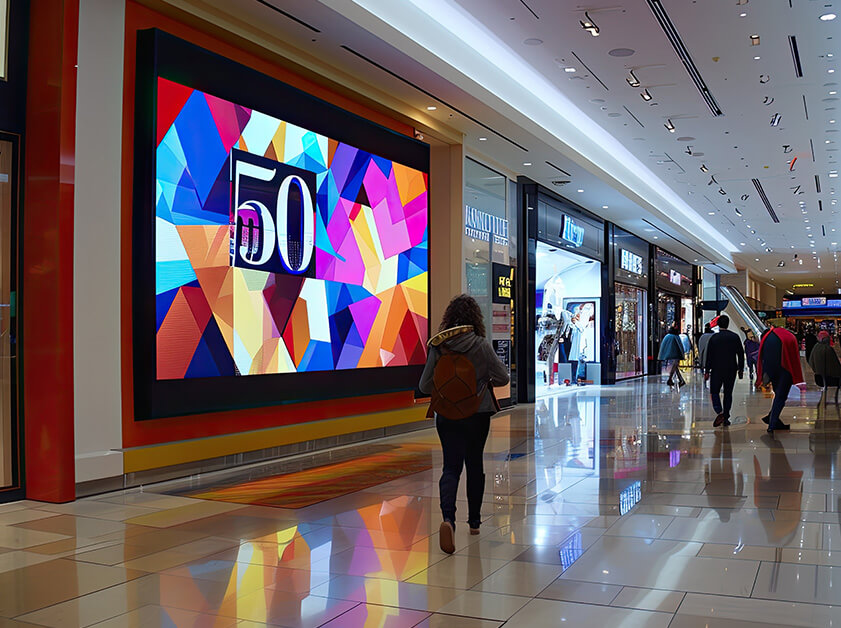
Rev Interactive LED displays deliver striking visuals and dynamic content that increase foot traffic, boost impulse purchases and strengthen brand recall LED panel. They pair motion storytelling, ambient audio and touch-enabled demos to extend dwell time and convert attention into sales. Scalable, modular installations reduce rollout risk and support rapid A/B experiments with clear KPIs. Integrated analytics link interaction depth, dwell and POS data to quantify ROI. Continue for practical features, measurement and deployment guidance.

Benefits of Interactive LED Displays for Retailers
In an increasingly competitive retail landscape, interactive LED displays deliver measurable advantages by attracting attention, enhancing brand recall, and driving on-the-spot engagement. They enable retailers to deploy dynamic, location based promotions that respond to traffic patterns, promoting autonomy for managers to adapt messaging without corporate delays LED advertising board. Clear analytics inform strategic placement and timing, reducing waste and increasing conversion rates. Displays complement existing staff training by simplifying product demonstrations and freeing employees to offer higher-value service, reinforcing a liberated customer experience. Cost-effective scalability permits pilots in select stores, then rapid rollouts based on performance data. The result is a disciplined yet flexible marketing tool that advances visibility, empowers local decision-making, and yields measurable returns while preserving operational freedom.
Key Features That Drive Engagement
Attention-grabbing, high-resolution visuals establish immediate brand presence and convey product detail with striking clarity. Touch-enabled interactivity transforms passive viewers into active customers, extending dwell time and collecting behavioral insights. Coupled with dynamic content scheduling, these capabilities enable retailers to deliver timely, targeted messages that maximize engagement and conversion.
High-Resolution Vibrant Visuals
When retailers prioritize high-resolution vibrant visuals, displays deliver crisp detail and accurate color that consistently capture shopper attention and reinforce brand perception. The presentation emphasizes Ultra HD imagery to showcase products with realism, enabling customers to assess texture, scale, and nuance without constraint. Strategic placement of such visuals creates aspirational environments that support freedom of choice and swift decision-making. Robust color accuracy tests validate fidelity across viewing angles and lighting conditions, ensuring brand palettes remain consistent and trustworthy. Technical reliability reduces maintenance downtime, preserving uninterrupted visual campaigns. Measured impact on dwell time and conversion guides optimization, allowing brands to iterate confidently. Ultimately, high-resolution vibrant visuals act as a silent salesperson, projecting clarity, authenticity, and the freedom to engage on one’s terms.
Interactive Touch Capabilities
Activate direct customer interaction through responsive touch interfaces that transform passive displays into engaging brand experiences. The system enables Multi touch demos that invite exploration, allowing multiple users to navigate catalogs, compare products, and personalize offerings without assistance. Gesture recognition expands accessibility, letting visitors control content with natural movements, reducing friction and reinforcing a sense of autonomy. Together these capabilities increase dwell time, foster memorable interactions, and collect anonymized engagement metrics that inform merchandising choices. Modular hardware supports seamless integration into varied retail footprints, while intuitive software minimizes training and maintenance overhead. The result is a strategic tool that amplifies brand presence by empowering customers to choose their journey, accelerating conversion through self-directed discovery and differentiated in-store experiences.
Dynamic Content Scheduling
Building on interactive touch capabilities that extend engagement, dynamic content scheduling orchestrates what customers see, when, and where to maximize relevance and conversion. It empowers retailers to design real time playlists that react to foot traffic, weather, inventory and promotions, delivering freedom to pivot messaging instantly. Schedules can prioritize high-margin items during peak hours, rotate brand stories between zones, and trigger localized offers as shoppers move. Seasonal automation reduces manual effort by preloading campaign shifts, ensuring timely shifts for holidays and product launches without constant oversight. Centralized control with granular timing preserves creative consistency while enabling experimentation. The result is a strategic, efficient content ecosystem that increases dwell time, drives purchases, and frees staff to focus on service rather than screen management.
Designing Compelling Content for In-Store LEDs
Craft content that captures attention within seconds and guides the shopper toward a clear action. The approach leverages motion storytelling and ambient audio to create immediate emotional resonance without overwhelming choice. Messages are short, prioritized, and visually bold to free shoppers from decision friction. Calls-to-action use simple verbs and clear benefits, timed to dwell patterns and sightlines. Templates guarantee brand consistency while allowing quick local edits for relevance. Visual hierarchy, color contrast, and succinct copy direct the eye; looping sequences rotate high-impact frames to maintain novelty. Testing metrics focus on engagement, lift, and conversion, informing iterative refinements. The result is content that feels liberating, purposeful, and aligned with shopper intent, driving measurable in-store outcomes.
Installation, Scalability, and Maintenance Considerations
With practical foresight, installation, scalability, and maintenance strategies are planned to minimize downtime, control costs, and guarantee consistent brand presentation across locations. Site surveys define power planning and cable management requirements, ensuring reliable feed and tidy runs that preserve store aesthetics and simplify troubleshooting. Modular expansion enables phased rollouts and easy upgrades, allowing operators to grow displays without full rebuilds. Clear documentation and standardized mounting cut installation time and reduce variability between sites. Predictable upkeep is achieved through vetted service contracts that specify response times, spare parts, and preventative schedules, preserving uptime and brand integrity. This strategic approach grants operators freedom to scale, iterate, and maintain engaging LED experiences while keeping operational burden and cost exposure tightly controlled.
Measuring Impact: Metrics and Analytics
Measuring the effectiveness of interactive LED displays requires tracking footfall and dwell time to quantify increased store visitation and in-store engagement. Correlating those behavioral metrics with conversion rates and sales lift validates the displays’ direct contribution to revenue. Content engagement rates further refine which messaging and interactions drive the strongest customer responses for ongoing optimization.
Footfall and Dwell Time
Although increased visibility can attract curiosity, the true value of interactive LED displays is proven through quantifiable shifts in footfall and dwell time; retailers should prioritize these metrics to assess campaign effectiveness and inform placement, content, and timing decisions. Objective measurement via visitor tracking and attention duration reveals where screens draw passersby, how long they stay, and which content holds interest. Strategic analysis enables iterative adjustments that respect customer autonomy while maximizing engagement. Data should guide placement near natural flows, optimize loop lengths, and schedule dynamic creatives for peak windows. Privacy-conscious tracking methods uphold freedom and trust.
- Implement anonymous visitor tracking to map traffic patterns
- Measure attention duration per creative
- Compare pre/post display footfall
- A/B test placement and content
- Use heatmaps for strategic positioning
Conversion and Sales Lift
Link conversion rates and incremental sales directly to interactive LED display activity to quantify business impact and justify investment. The team measures lift by correlating in-store transactions and promo redemptions with display-triggered events, using A/B testing to isolate creative, placement and timing effects. Attribution models combine point-of-sale data, session logs and Mobile integration touchpoints—QR scans, app check-ins and push-driven offers—to trace customer journeys from interaction to purchase. Reporting emphasizes conversion uplift, average transaction value change and campaign ROI, presented as clear KPIs for stakeholders seeking operational freedom. Recommendations prioritize rapid experiments, tight measurement windows and automated dashboards so decisions scale confidently and investment reallocations are evidence-based rather than intuitive.
Content Engagement Rates
Regularly tracking content engagement rates provides a precise lens into how interactive LED displays capture attention and drive behavior across touchpoints. Data on dwell time, interaction depth and click-throughs quantifies effectiveness, while social listening ties in earned impressions and sentiment. Gamified quizzes and touch-based challenges reveal preferences and increase recall, feeding optimization loops. Strategic reporting aligns metrics with freedom-seeking brand goals: empower customers, reduce friction, and enable choice-driven journeys. Actionable insights prioritize formats that maximize engagement per square foot and per visit. Continuous testing refines creative cadence and call-to-action placement to lift conversions without constraining audience agency.
- Dwell time and interaction depth
- Click-throughs and conversion attribution
- Social listening and sentiment trends
- Gamified quizzes engagement scores
- A/B tests and iterative optimizations
Use Cases and Success Stories
Several retailers have leveraged interactive LED displays to increase foot traffic, boost impulse purchases, and strengthen brand recall by pairing dynamic visuals with contextual content and real-time analytics. Case studies highlight stores that integrated augmented reality try-ons, enabling customers to visualize products instantly and complete purchases on the spot. Another chain used social gamification—live leaderboards and shareable challenges—to turn browsing into community-driven engagement, amplifying organic reach. Measured outcomes included higher conversion rates, longer dwell times, and improved loyalty metrics. Execution emphasized modular content strategies, privacy-compliant data capture, and staff training to support seamless interaction. These examples demonstrate a strategic pathway: deploy immersive experiences that respect customer autonomy, iterate with analytics, and scale proven tactics to expand visibility and sustain retail freedom.
Frequently Asked Questions
Can Interactive LEDS Integrate With Existing POS Systems?
Yes. It can: interactive LEDs support payment integration and data synchronization with existing POS systems, enabling seamless transactions, real-time inventory and customer insights, empowering operators to customize experiences quickly while maintaining control and operational freedom.
What Is the Typical Lifespan of Rev LED Modules?
Typical Rev LED modules last about 50,000–100,000 hours. Emphasizing module durability, the company pairs robust components with clear warranty coverage, enabling buyers to confidently choose flexible, long-term display solutions that preserve operational freedom.
Are There Financing or Leasing Options Available?
Yes; the company offers flexible lease programs and vendor financing so clients can preserve capital and scale freely. The options are structured, strategic, and customizable to align cash flow with growth and autonomy goals.
Do LEDS Comply With Accessibility Regulations (E.G., ADA)?
Yes. They can comply when designed to respect visual contrast and integrate tactile signage or complementary printed/physical elements; the supplier should guarantee adjustable brightness, legible fonts, and placement that preserves access, empowering compliant, flexible installations.
Can Content Be Remotely Scheduled Across Multiple Locations?
Yes. It enables remote scheduling across multiple locations via cloud management, empowering teams to centrally control campaigns, automate playlists, and adapt messages instantly—granting operators freedom, consistency, and strategic agility for brand deployment.
Conclusion
Interactive LED displays deliver measurable advantages for retailers by elevating brand visibility, driving engagement, and enabling data-driven decisions. Their configurable features—touch interactivity, dynamic content, and networked analytics—support scalable deployments across stores while simplifying maintenance. When content is strategically designed to align with customer journeys and promotions, conversion and dwell time improve. Combined with clear implementation plans and KPI tracking, interactive LEDs become a high-impact, future-ready investment that strengthens in-store experiences and retail performance.